
Solar and electrical contractor in Alstonville, NSW
Working on the Alstonville Plateau
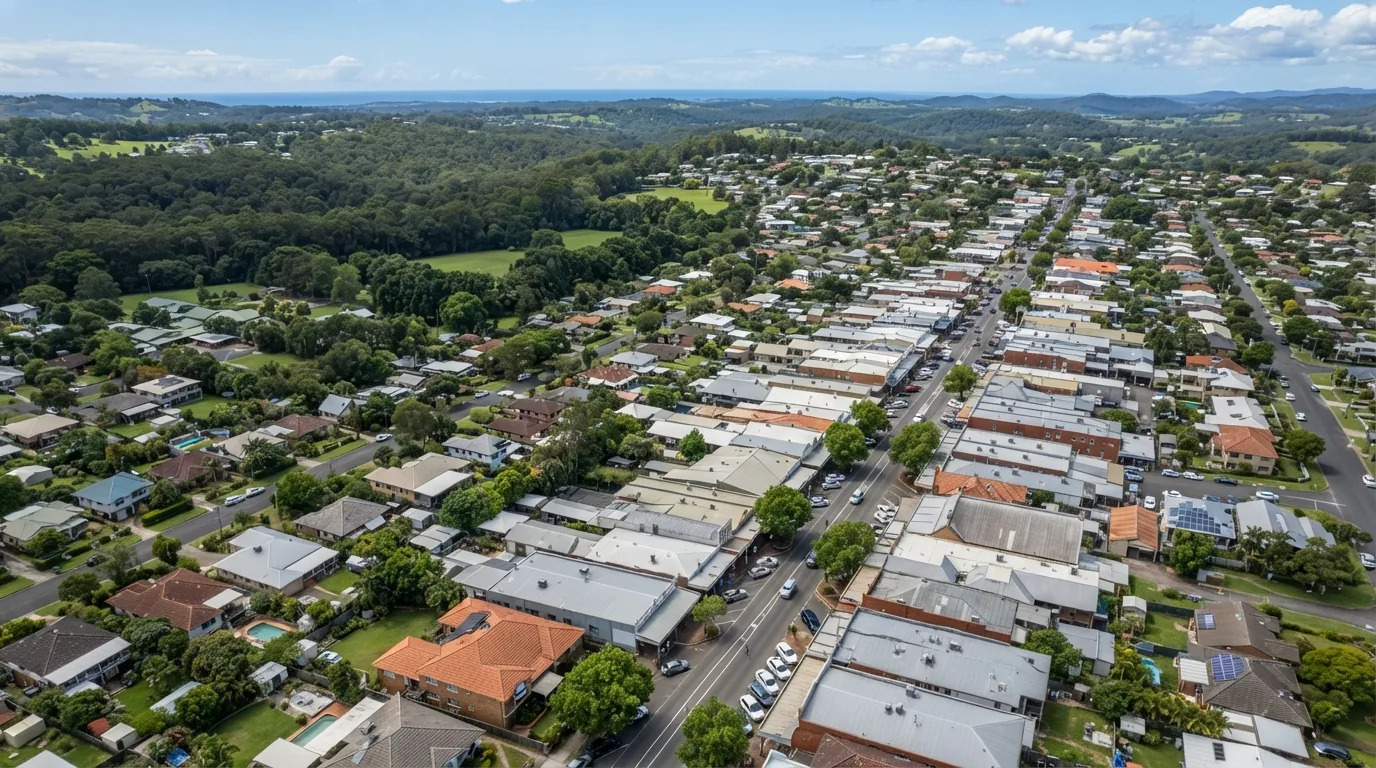
Alstonville is the main town of the plateau, about 140 metres above sea level on rolling basalt country with deep red volcanic soil and plenty of rain. Farms and small holdings grow macadamias, avocados and lychees around it, and the first commercial macadamia orchard was planted at Rous Mill in the early 1880s. The Bruxner Highway now bypasses the town, with the Alstonville Plaza near the centre, and Wollongbar a few kilometres west. Our work here runs between town streets, farm sheds and orchard blocks.
In Alstonville itself, the streets are quieter and driveways are manageable, but out on the plateau roads many properties are behind gates with long driveways and a house set well back from the road. The meter may be on a pole at the front boundary and the switchboard in a shed or a back verandah. Sheds, pump houses and irrigation boards can be a long way from the house, so we need to know every building that has a supply.
Alstonville housing is a mix of older timber homes on large lots and newer houses in recent estates. The plateau gets heavy rain, around 1,800 millimetres a year, so damp and leaky roofs, rusted fittings and wet switch boxes are common. Farm sheds and big roofs suit solar well, but the wiring to them has to be right, particularly where a long cable run connects an outbuilding to the main board.
What we do here most
What Alstonville Plateau properties keep needing
The jobs here come from big shed roofs, orchard equipment and wet ground, set against a town where older and newer homes sit close together.
Solar
Shed roof solar on a macadamia farm
A big machinery shed on an orchard can carry far more panels than the house needs, and farm loads like cool rooms, dryers and pumps run in daylight. We check the roof sheeting and framing, how far the shed is from the meter and the size of the cable run between them. The farm's own working pattern decides the size of the system.
Electrical
Water pump supply to an orchard block
A pump out in the orchard often runs on a long cable from a shed board, and over time damp ground and rain take their toll on joints and conduit. When the pump trips or runs slowly, we test the cable and the isolator, find where the water is getting in, and replace what has failed. Where a rebuild is needed, we explain it first.
Inverters
Ageing inverter on an older plateau home
An older timber house may have a solar system that has been running for years, and the inverter on the wall begins to show faults or stops on wet days. We look at the inverter, the isolators, the cabling and the roof side, and tell you whether it is the inverter itself or something around it that has gone wrong.
Commercial
Workshop supply upgrade at Russleton Park
A small business in a unit at the Russleton Park industrial estate may add a welder, a compressor or a second roller door, and find the board and the supply cannot keep up. We check the load, the cabling and the protection, and set out what the unit needs before more machinery goes on. The landlord is brought in where the change touches the building.
If it is urgent
If the power fails on the Alstonville Plateau after heavy rain
- 1Look at your switchboard without opening it, and check whether the safety switches have dropped, whether the shed or pump has gone off, and whether neighbours along the road have power.
- 2Leave alone any pump, shed board or outdoor isolator that is wet, and do not wade through a flooded paddock or shed to reach it, because water and live equipment do not mix.
- 3When you call, tell us the road and how far the house is from the gate, which buildings have a supply, and whether the pump, the shed or the house is the thing that has failed.
Common questions
Frequently Asked Questions
Which areas do you cover?
The Northern Rivers of New South Wales, from our base at Dorroughby, between Lismore and Byron Bay. Twenty places have their own pages on the service areas page, but they are a starting point rather than a boundary. If you are not sure we reach your address, call and we will check.
Do you answer the phone after hours?
Yes. The phone is answered at any hour, every day, on the number at the top of this page. Call with your address and what you are seeing, and we will tell you what to leave alone and what happens next.
Do you work on farms and businesses as well as homes?
Yes. The work runs from a single house roof to sheds, workshops, shops and farm buildings, on mains power and off it. Tell us what the building is used for and when it is busy, because that decides when the work can happen.
What should I send when I enquire?
A photo of your switchboard with the door open, a photo of the roof or the spot where equipment would go, and a recent power bill if you have one. If you already have a system, add a photo of the inverter and any error on its screen. Photos let us give you straight answers before anyone visits.
Will my solar keep working in a blackout?
A standard grid-connected system switches itself off when the grid goes down, even in full sun, and that is a safety feature. To keep some power on during an outage, the system needs a battery set up with a backup circuit. Which circuits go on that backup is decided with you before the work starts.
Can I add a battery to the solar I already have?
Often yes, but it depends on the inverter you have now and how the system is wired. Some inverters take a battery as it is, and others need replacing or adding to first. Send a photo of the inverter and we will tell you which it is likely to be.
What is the difference between grid-connected, hybrid and off-grid?
A grid-connected system works alongside the street supply and has no battery. A hybrid system uses one inverter to run the panels and a battery together. An off-grid system has no street connection at all, so the panels, battery and a backup generator input carry the whole property.
Can you work on a system someone else installed?
Yes. The first step is finding out exactly what is there, which means opening the switchboard, checking the cabling and reading what the inverter reports. After that we tell you what can stay, what should be repaired and what should be replaced.
Why does my solar system keep switching off or showing an error?
There are many possible causes, from a failing part to a loose connection or a fault on one string of panels. We trace the fault step by step and read the error codes before anything is replaced. Send a photo of the inverter screen and tell us when it happens.
What should I do if I see damage or smell burning near electrical equipment?
Keep clear of it and keep children and pets away. If there is fire or smoke, call emergency services first. Then call us, tell us what you saw and where, and leave the equipment alone until it has been checked.
Will the power go off while you work?
For most solar, battery and switchboard jobs the power is switched off for part of the day. We tell you when it will go off before we start, so you can plan around fridges, medical equipment and anything else that needs to keep running. Ask about it when you book.
Do you work on properties with no mains power?
Yes. Off-grid work starts with a list of what you run and when, because that decides the size of the panels, the battery and the inverter. We also look at the site itself, including shade, access and how far the equipment sits from the house.
Everything we do here
Services in Alstonville, NSW
The twenty things we do across the Northern Rivers include the farm shed solar, pump supplies and older wiring that the wet red soil and big properties of the Alstonville Plateau tend to need.
Local, and on the phone
Solar and electrical work in Alstonville
Tell us whether the job is in town, on a farm or in an industrial unit, and list every building on the property that has power. That decides how many boards we need to look at and how long the visit will take.
0417 415 47424 hours a day, 7 days a week
Not urgent? Send us the job instead